
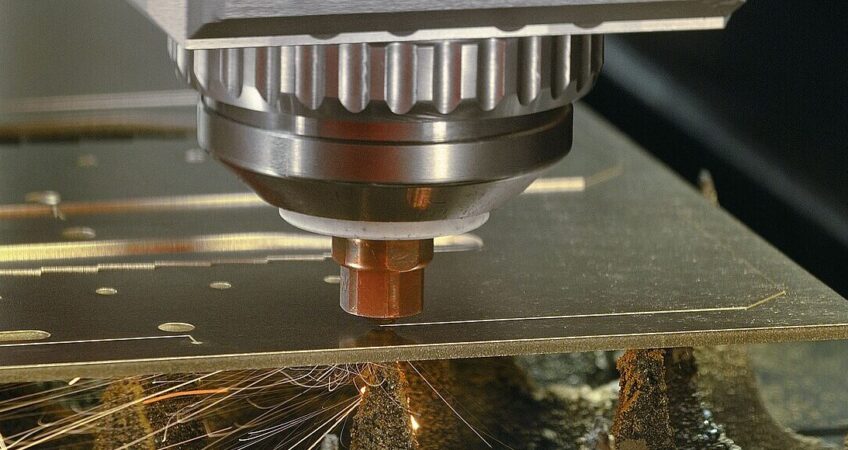
A sheet metal shop used to be easy to picture. A laser or a punch cut flat shapes out of a sheet. A skilled operator stood at a press brake and bent each one by hand and eye. A welder joined the pieces. Then the part was painted.
Walk into a leading shop today and some of that picture has gone. The laser loads its own sheets from a storage tower and stacks the cut parts on pallets, through the night, with the lights off. A robot feeds the press brake, and a camera checks every angle before the bend is finished. A robot arm on a trolley welds brackets beside the person who used to weld them. Software decides how the parts sit on the sheet.
Not every shop looks like this, and most still do not. This article sets out what is real, what is still a promise, how fast it is spreading, and what it does to the price and lead time of the part you are buying. It is long, so the short version comes first.
The short version
Lasers now run without people. A Dutch fabricator runs three fully automatic laser machines on three shifts and through the weekend. The machines cut, remove, sort and stack the parts themselves.[23]
Bending is the bottleneck, and it is still mostly manual. One large machine maker puts the share of bending machines that are automated at about 10% worldwide.[1]
Software now does jobs that used to take an expert hours. A robot bending cell that took up to two hours to program can be programmed in seconds, according to its maker.[1]
AI is real in four places: watching the cut through the laser nozzle, laying parts out on the sheet, predicting how metal springs back after bending, and finding parts with cameras.[22, 4, 5, 7]
The robots are arriving fastest in China. China installed 354,000 industrial robots in 2025, 59% of the world total, and installations in its metal and machinery industries rose 44%.[27]
Welders are scarce everywhere. The American Welding Society expects the US to need 320,500 new welding professionals by 2029.[30]
Trade measures now move cost more than machines do. The US charges 50% on the full value of articles made of steel or aluminium.[15]
1. The laser: more power, a camera in the nozzle, and nobody watching
Almost all new flat-sheet lasers are fibre lasers. The light is made inside a glass fibre and carried to the cutting head by another fibre, with no mirrors to align. The head focuses it to a spot a fraction of a millimetre wide, and a jet of gas blows the molten metal out of the cut.
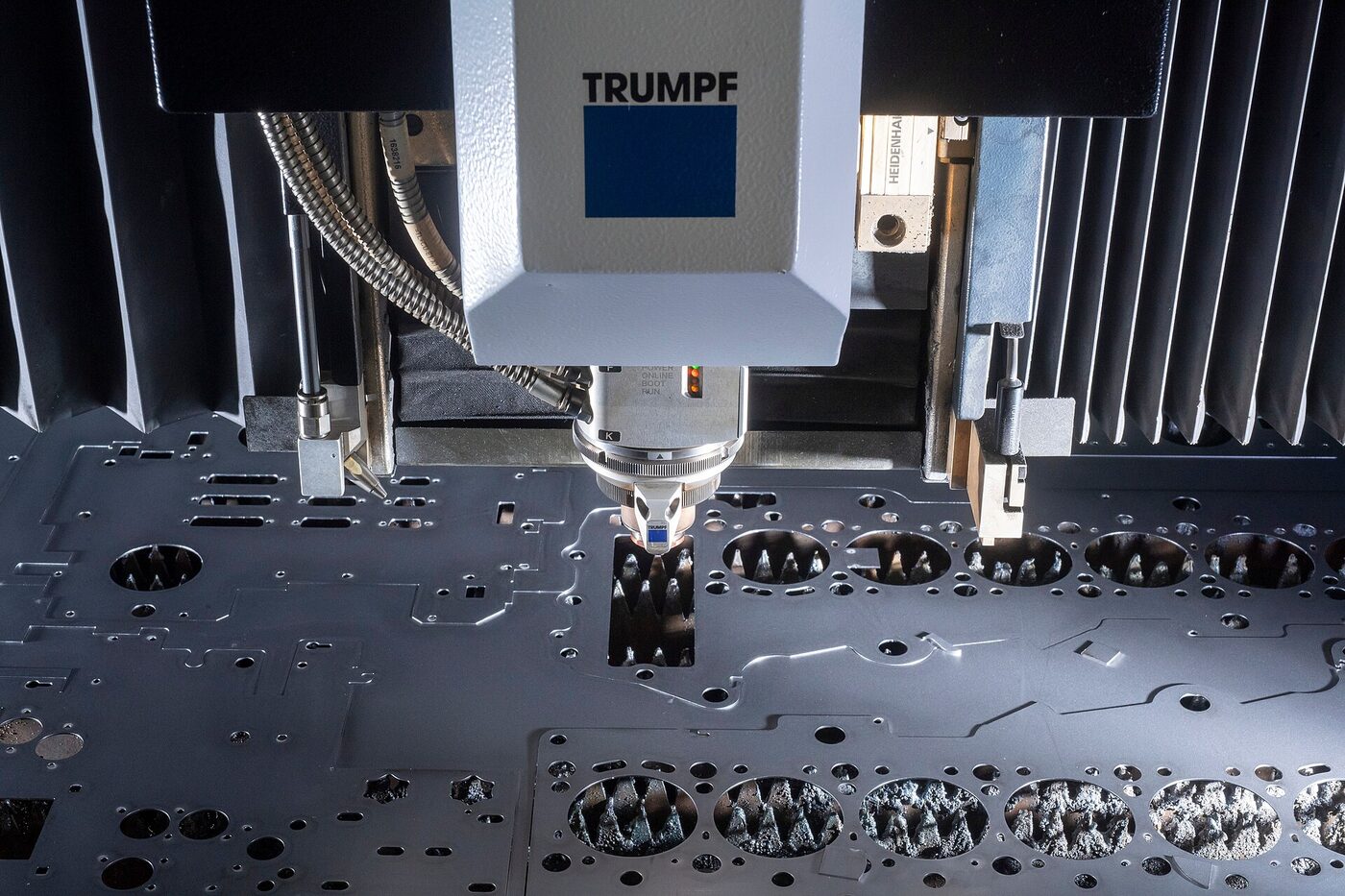

The power race
Ten years ago a 4 kW laser was a normal purchase. Machine makers now sell 24 kW and 30 kW machines. More power does two things. It cuts thin and medium sheet much faster, and it cuts plate that used to go to a plasma or flame cutter.
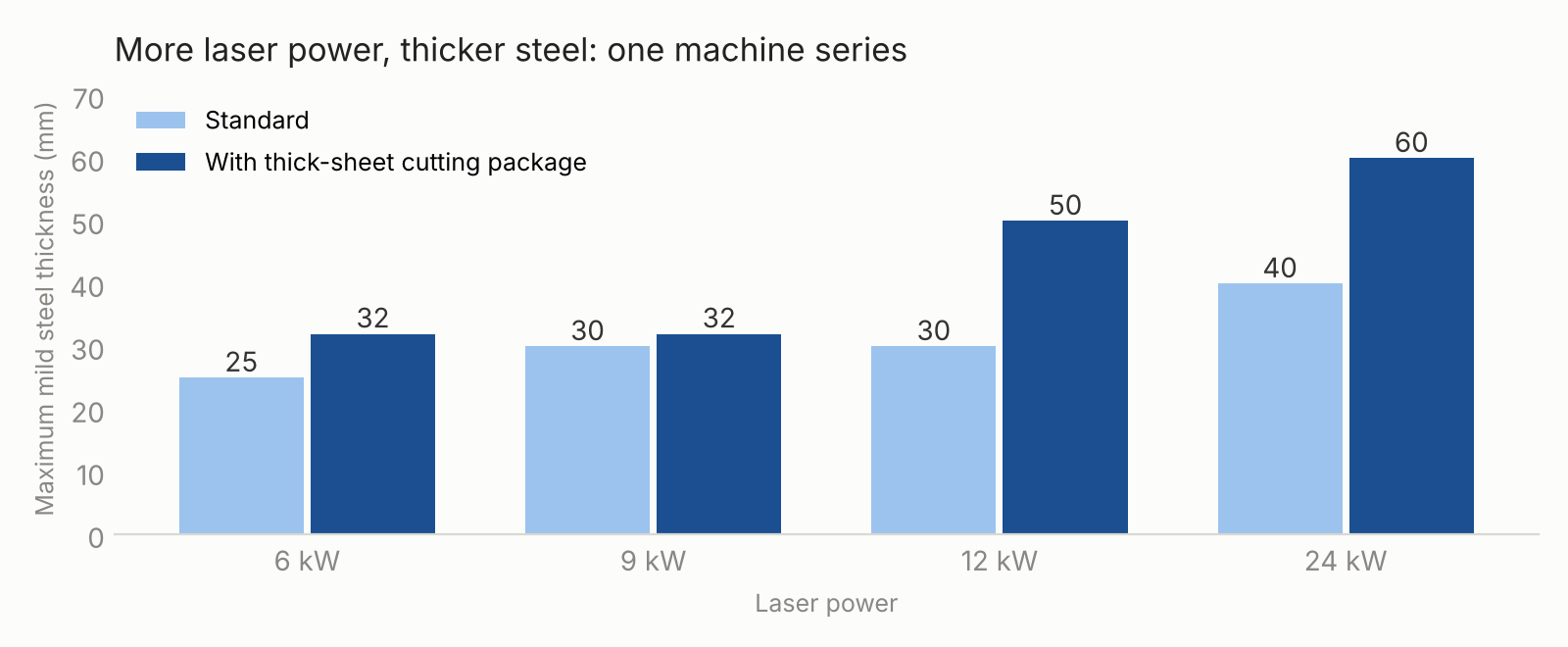
One maker’s current data shows the thickness side of that: its 6 kW laser is rated for mild steel up to 25 mm, and its 24 kW laser for 40 mm, or 60 mm with a thick-sheet option.[8]
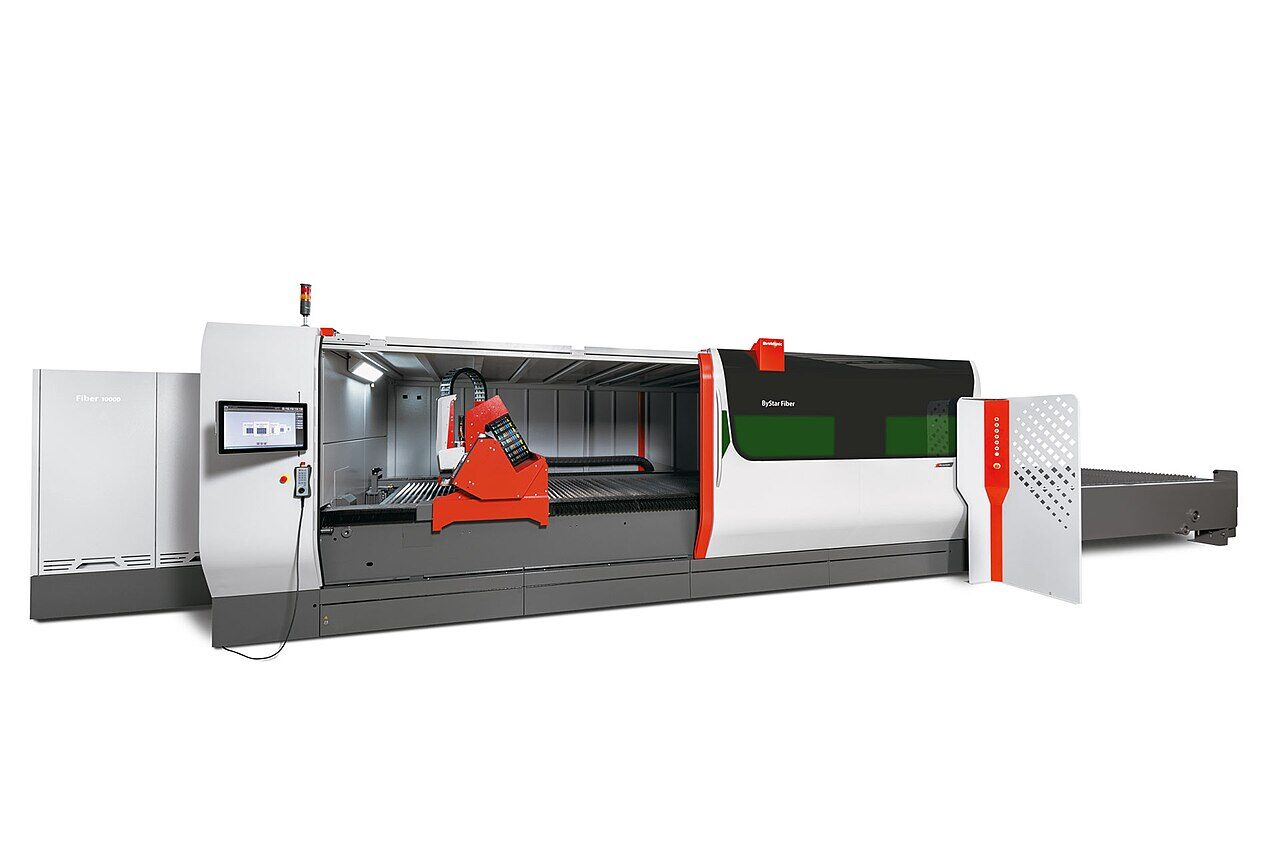
On speed, Bystronic says its 30 kW machine cuts mild steel between 6 and 15 mm about twice as fast as its 15 kW machine, and more than twice as fast from 20 mm upward.[22] That is the maker’s own comparison, but it explains why shops buy the power: the same machine and the same floor space turn out far more parts.
Power is not free. The data sheet that lists 25 mm for the 6 kW laser also lists an average power draw in production of 11 kW, against 27 kW for the 24 kW laser.[8] And power does not make thick plate cut as fast as thin sheet. Speed still falls as thickness rises.


A camera that watches the cut
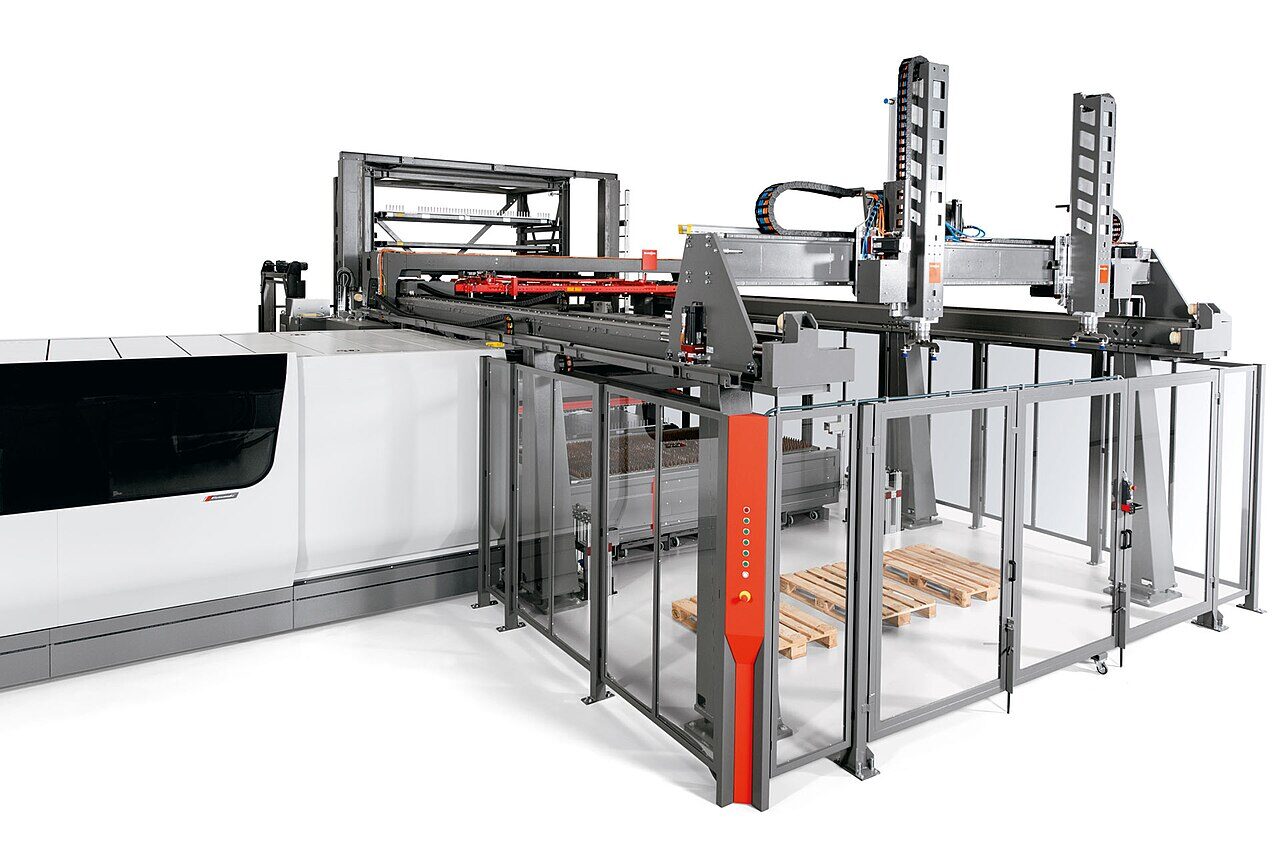
The more interesting change is that the machine now checks its own work. Bystronic’s high-power machine has a camera that looks straight down through the nozzle at the cut. If the cut breaks off, the system detects it and cuts that section again. It also detects a lost nozzle. The company describes the control as AI-based and aims it at production with few people present.[22]
This matters because an unattended laser has a simple weakness. If one cut fails at two in the morning, every sheet after it may be scrap by the time someone arrives. A machine that notices and recovers is what makes running through the night safe.
From the drawing to a sorted stack of parts
Cutting was never the slow part. Getting the parts out of the sheet was. Somebody had to break each part free, sort it and stack it for the next step.
The newest machines do this too. VDL Technics, a fabricator in the Netherlands with about 130 people, runs three of TRUMPF’s fully automatic laser machines on three shifts, and they keep running over the weekend. The first one completed unattended 24-hour shifts about ten weeks after it was installed in 2021. The machine cuts the parts, lifts them out, sorts them and stacks them on up to eight pallets, and the pallets move on to a robot bending cell. People still load the raw sheets into the storage tower.[23]
The limits are just as instructive. A second Dutch fabricator that has automated its sorting told a trade magazine that it sorts about 80% of its parts by machine and does not aim for 100%, because sorting everything automatically would take about twice as long as doing the small, easy layouts by hand.[3]
Smarter use of the sheet
The quietest gain is in how parts are laid out on the sheet, which fabricators call nesting. A 2026 case study compared a layout done by hand with one done by nesting software, on the same 10 mm stainless steel sheet. The software fitted 76 parts where the hand layout fitted 44, and cut scrap from 96.4 kg to 61.6 kg per sheet.[4]
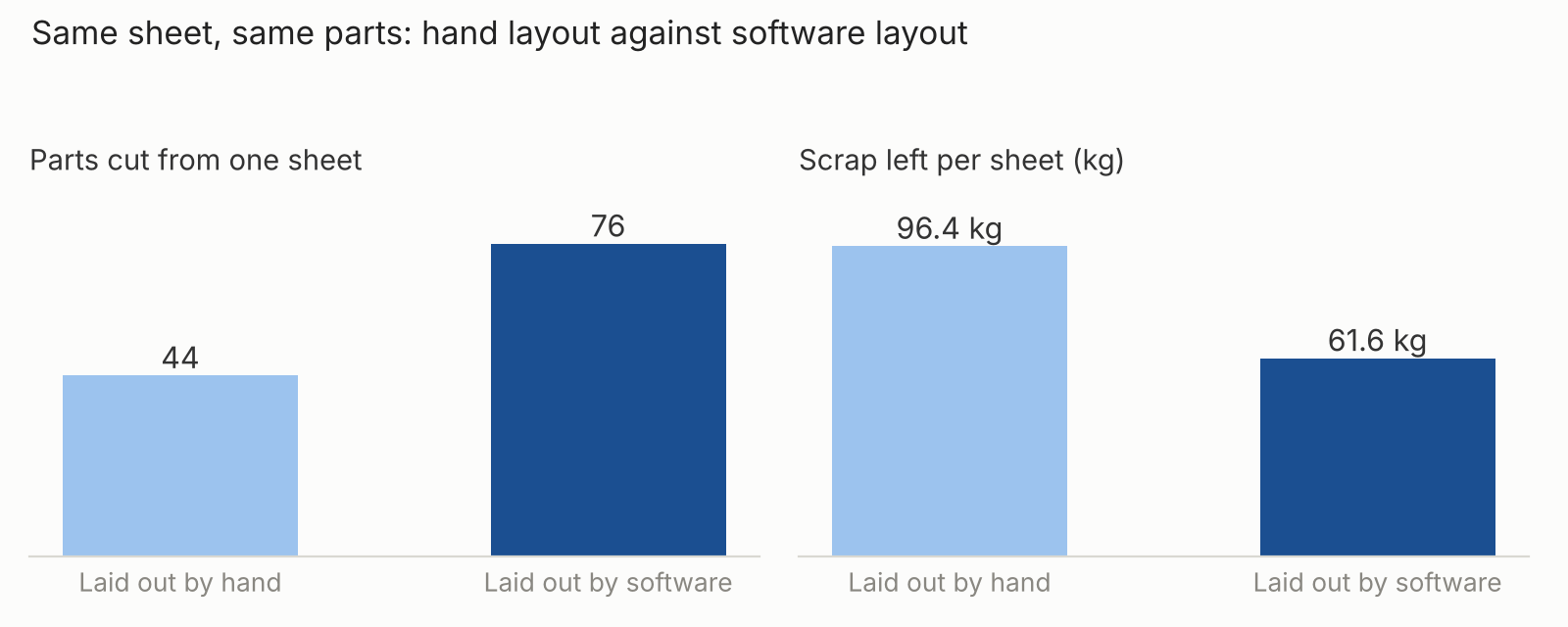
At the paper’s stainless price of 9 euros a kilogram, that is about 314 euros of metal saved on every sheet.[4] Material is the largest cost in many fabricated parts, so layout often matters more to the price than cutting speed does.
Cutting straight from the coil
For high volumes there is a newer idea still: skip the sheet. A laser blanking line unrolls a coil of steel and cuts shaped blanks from the moving strip, with no blanking die. ANDRITZ Schuler says its latest line produces up to 45 parts a minute from coil between 0.6 and 6 mm thick, and saves 17% of the material against a conventional die cut on one comparison.[24] A die for a large blank costs a great deal and takes weeks to make. Removing it changes how quickly a new part can start.
2. Bending: the last manual step is being automated
A laser can run through the night with nobody watching. A press brake has traditionally needed a skilled operator for every bend: choosing tools, positioning the part, judging the angle and correcting for the way each batch of metal behaves. That is why bending is where machine makers are putting their effort, and why only about one bending machine in ten is automated so far.[1]


Measuring the angle while bending
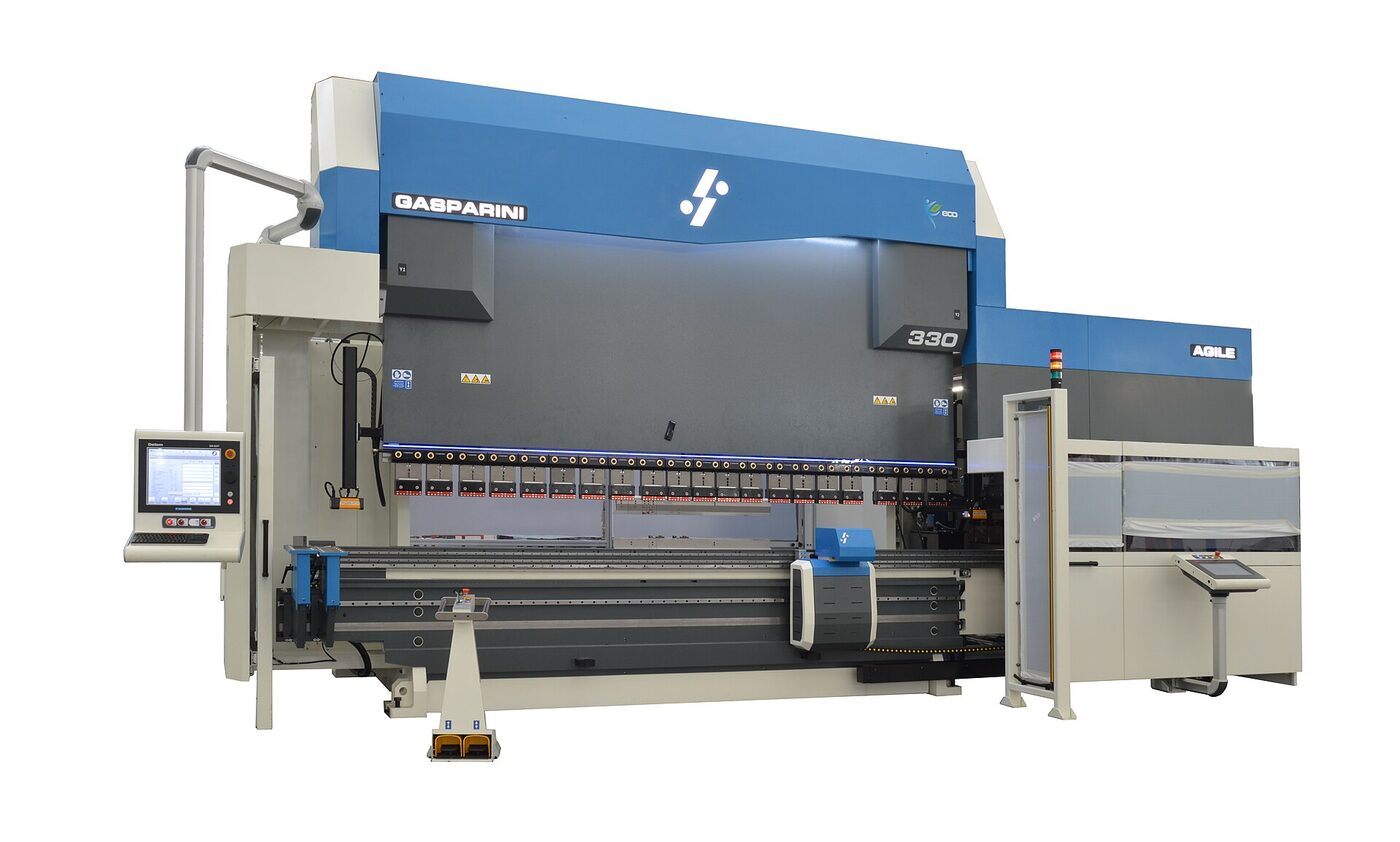
Metal springs back a little when the tool lifts, and how much depends on the batch. The traditional answer is a test bend, a measurement and a correction. Modern press brakes measure during the bend. TRUMPF’s system projects a laser line onto the sheet and reads it with a camera, with no contact, then corrects the stroke automatically for differences in material batch or thickness. The company quotes an angle accuracy of 0.3 degrees or better.[25]
The practical result is that the first part of a batch is good, not the third. On a batch of ten that is a large share of the cost.
Machines that set themselves up
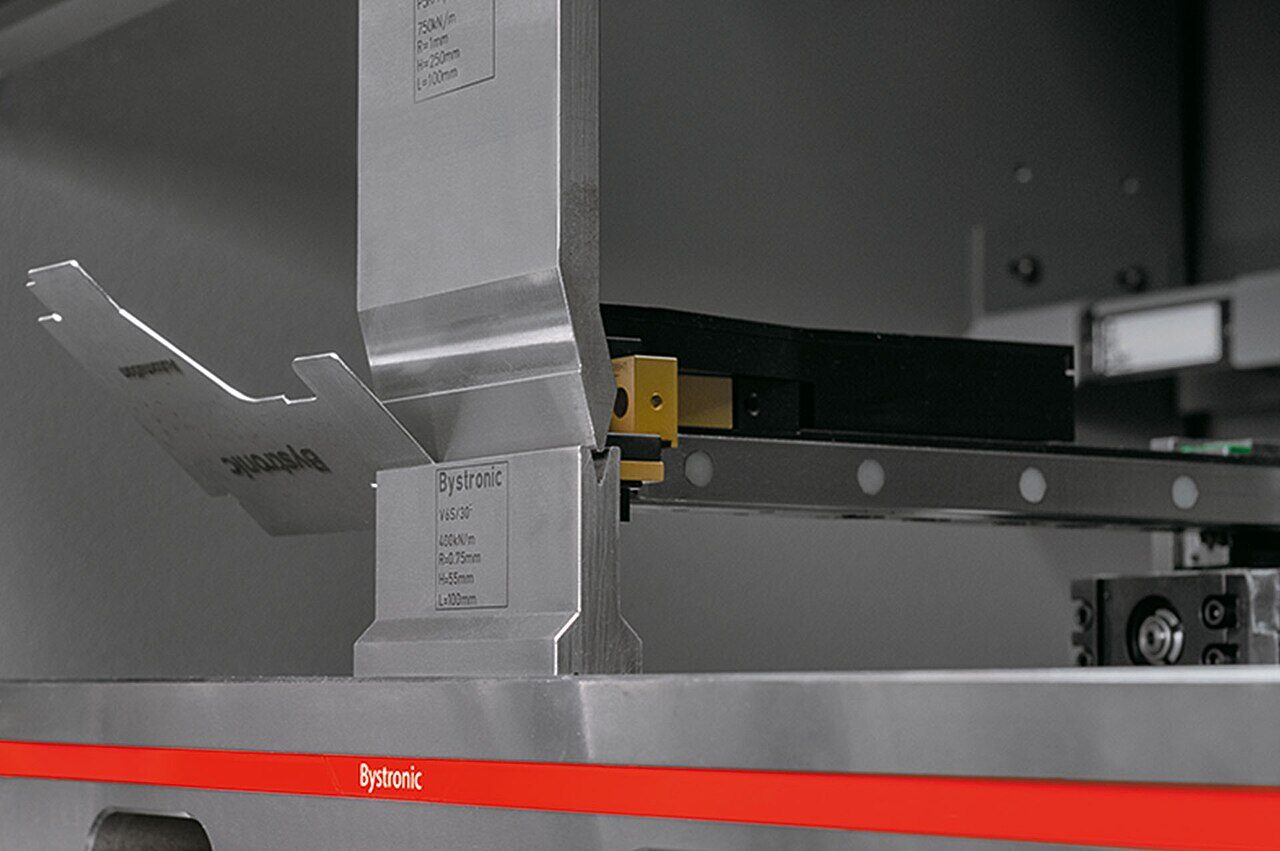
Changing tools between jobs is the other time sink. Some press brakes now pull punches and dies from a rack and set them up themselves, as in the photo above. Panel benders go further. A panel bender holds the sheet flat and folds its edges with blades. Salvagnini describes its machines as using universal tools that adapt automatically to each part, with no re-tooling, and sensors that adjust for changes in the material.[26] For box-shaped parts such as doors, covers and cabinets, that removes set-up almost entirely.
The robot at the press brake
The old obstacle to robot bending was programming. Teaching a robot to pick up a part, present it to the press brake and turn it between bends took so long that it only paid for large batches.
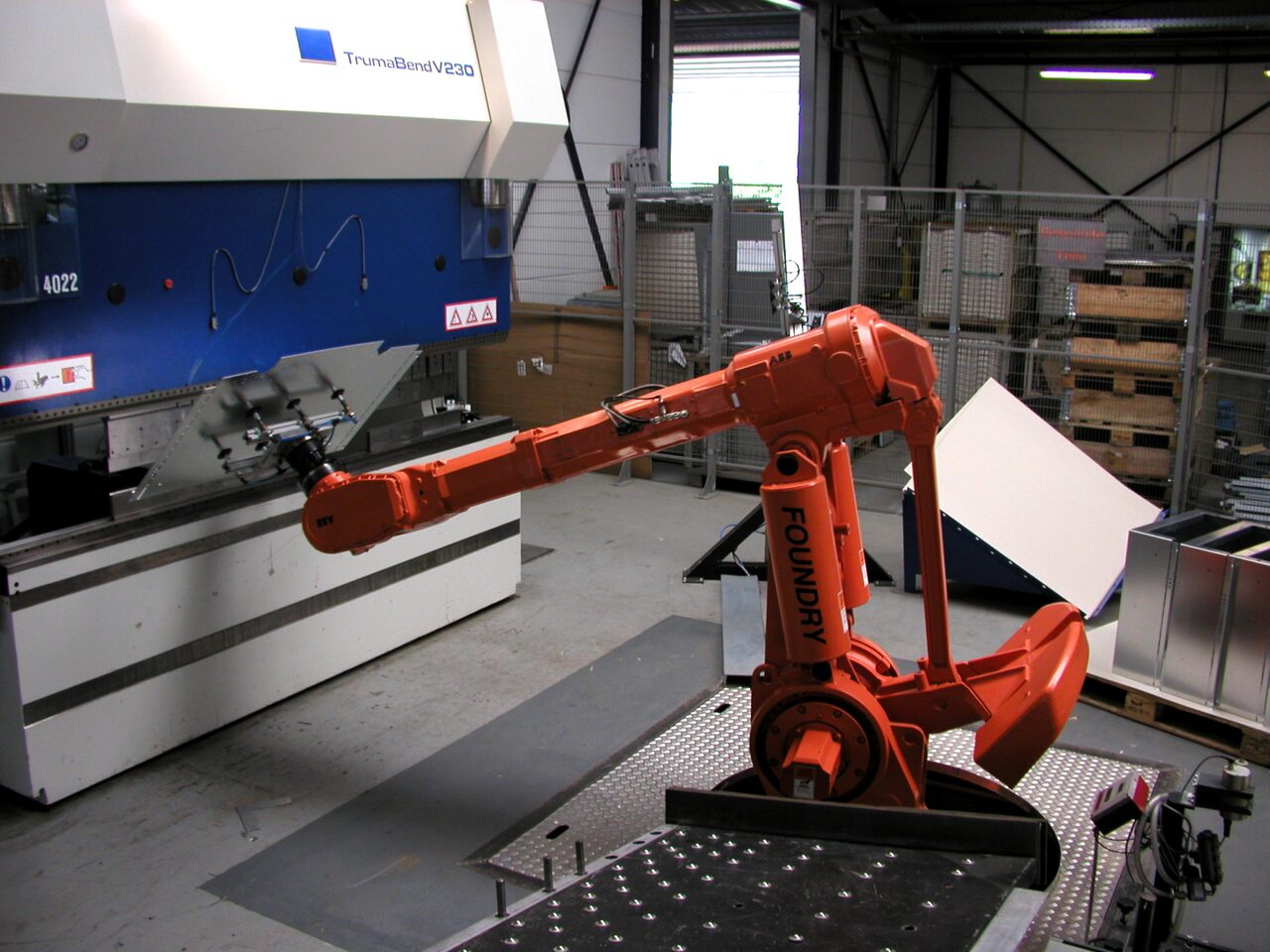

TRUMPF says its current software builds the program for both the machine and the robot from the CAD file, cutting programming time from up to two hours to a few seconds, and that its mobile bending cell saves 30% of the time per bend.[1] The cell handles parts up to 600 by 400 mm in sheet up to 6 mm thick, and the company aims it at shops with small batches and too few skilled people.[2]
These are the maker’s own figures, not independent measurements. But the direction is clear: if programming takes seconds, a robot becomes worth using on a batch of fifty parts and not only on fifty thousand.
3. What AI really does today
“AI” is on every stand at every trade show. In the published research and in machines you can buy, it is doing four specific jobs.
Watching the cut. The camera-in-the-nozzle system described above is the clearest example in production.[22]
Laying out the sheet. Nesting software is the oldest and most proven use, with the savings shown in section 1.[4]
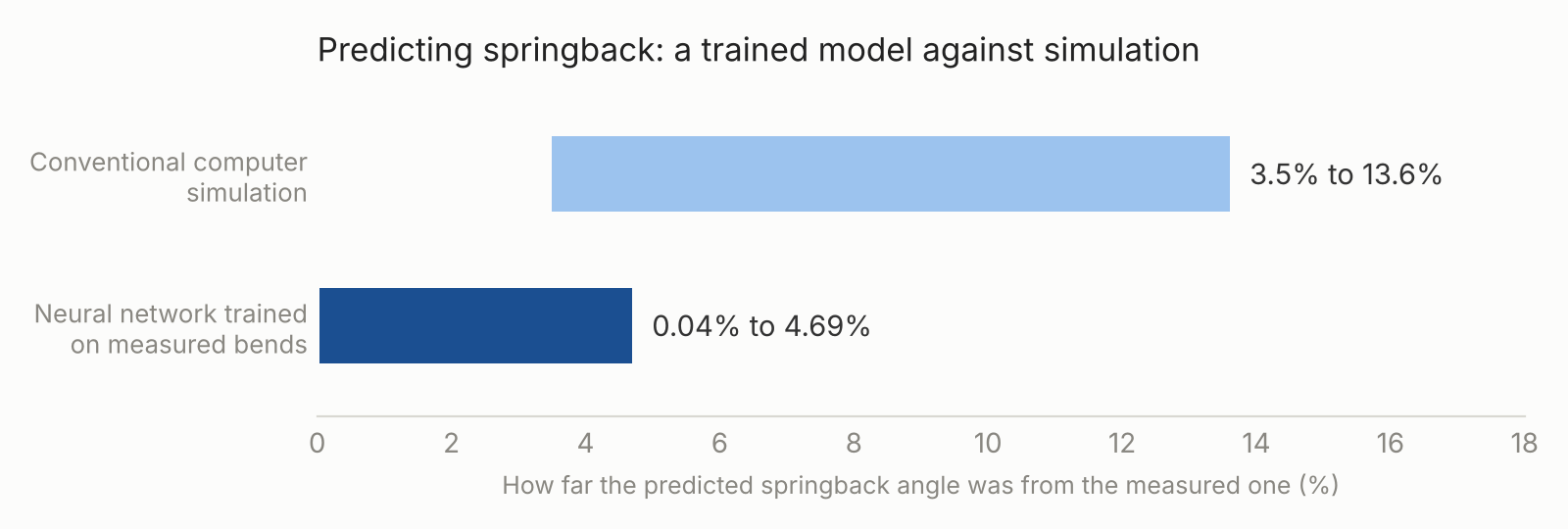
Predicting springback. This is where the research is busiest. A 2026 study trained a neural network on 142 measured bends in three automotive steels and compared it with conventional computer simulation. The network’s predictions were within 0.04% to 4.69% of the measured springback angle. The simulation was off by 3.5% to 13.6%.[5]
Another 2026 paper predicted the springback of a car roof crossbeam to within an average of 0.38 degrees.[6]
Seeing the part. A study using 1,400 real production images located the corners of a sheet with cameras to within about two pixels, which is what a robot needs in order to pick a sheet up reliably.[7]
Two cautions. Most of the springback work is still in the laboratory or on car-body stampings, not in the general fabrication shop. And none of it removes the need for someone who understands the part. It shortens set-up and reduces scrap on the first few pieces.
4. Robots: how many, where, and doing what
Factories installed about 603,000 industrial robots worldwide in 2025, 11% more than the year before. Installations in the metal and machinery industries grew by 22%, faster than in electronics or cars.[12]
More than half of them went to one country. China installed 354,000 robots in 2025, which is 59% of the world total. Its metal and machinery industries alone took 78,700, up 44% in a year, and Chinese robot makers supplied 55% of the country’s installations.[27]
That needs one piece of context. Measured against the size of its workforce, China is not yet among the most automated countries. It has 193 robots for every 10,000 manufacturing workers, 19th in the world, against 1,066 in South Korea and 469 in Germany. But its figure rose 147% between 2020 and 2025.[28]
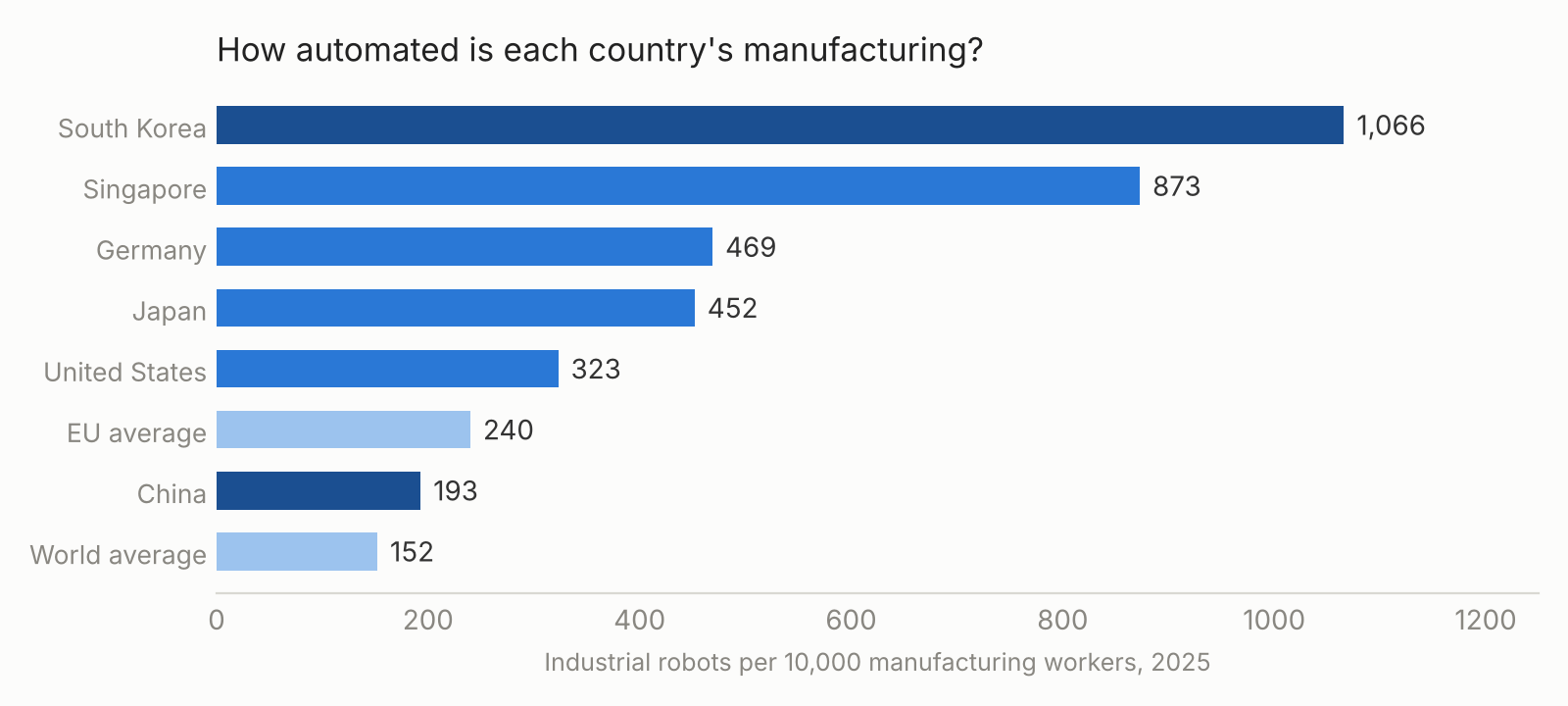
For anyone buying fabricated parts made in China, both numbers matter. The country is automating faster than anywhere else, and it still has a long way to go, so the level of automation differs a great deal from one factory to the next.
Welding robots and the people shortage
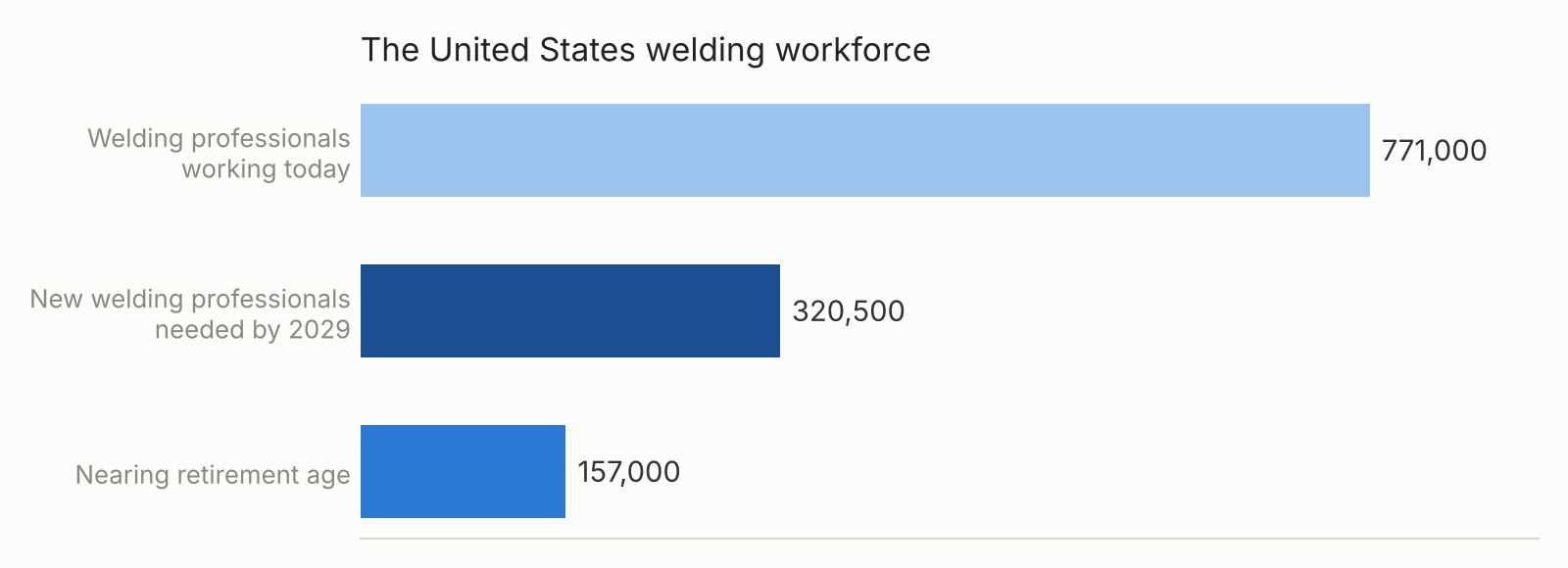
Welding is the fabrication step with the worst labour problem. The American Welding Society counts about 771,000 welding professionals in the United States, says more than 157,000 of them are nearing retirement age, and projects that 320,500 new ones will be needed by 2029.[30] The US government expects about 40,300 openings a year for welders and related trades through 2035, mostly to replace people who leave.[21]
Australia reports the same thing. In Weld Australia’s 2026 survey, 89.2% of respondents said the country lacks enough qualified welders for expected demand.[20]
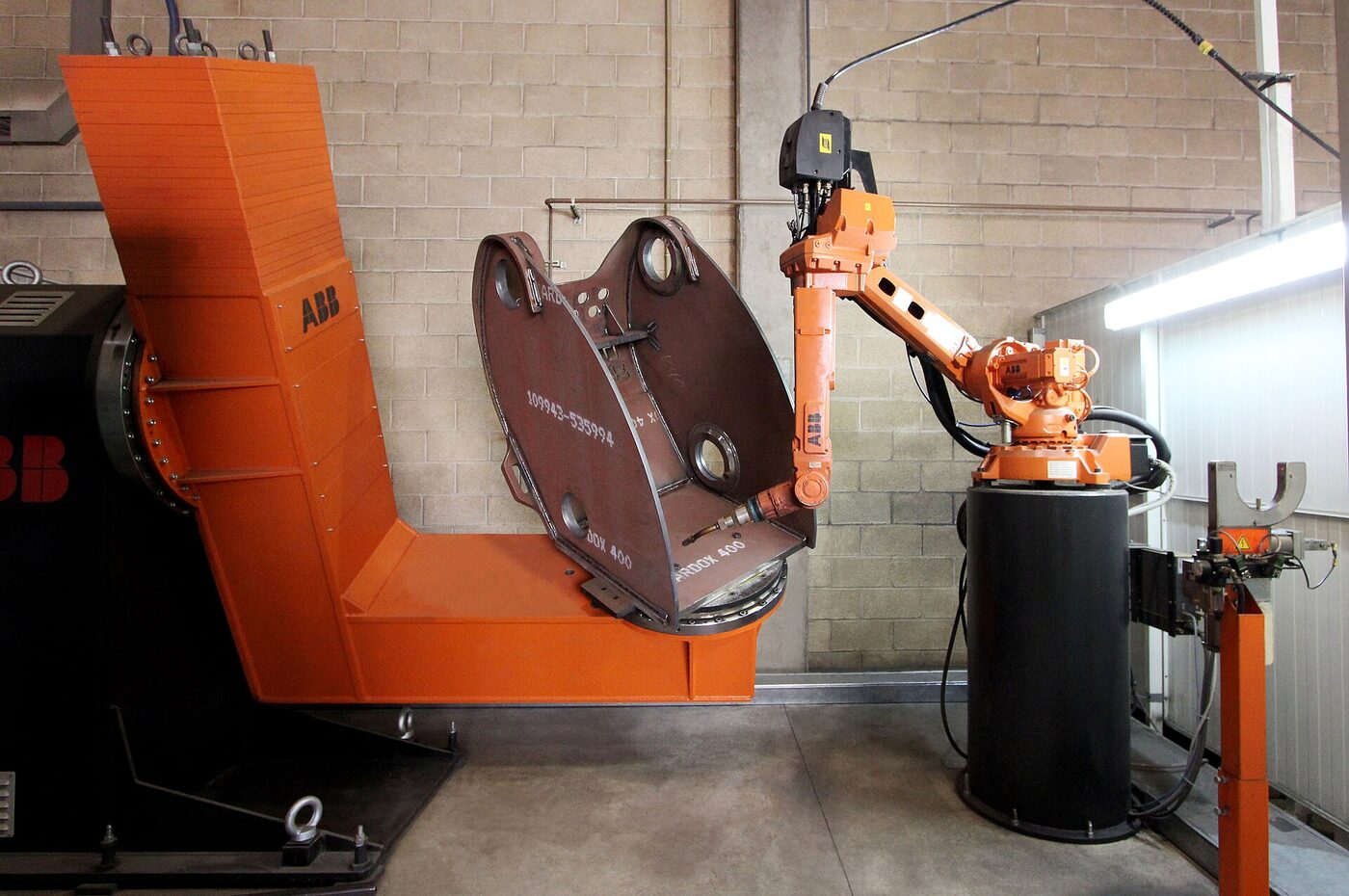

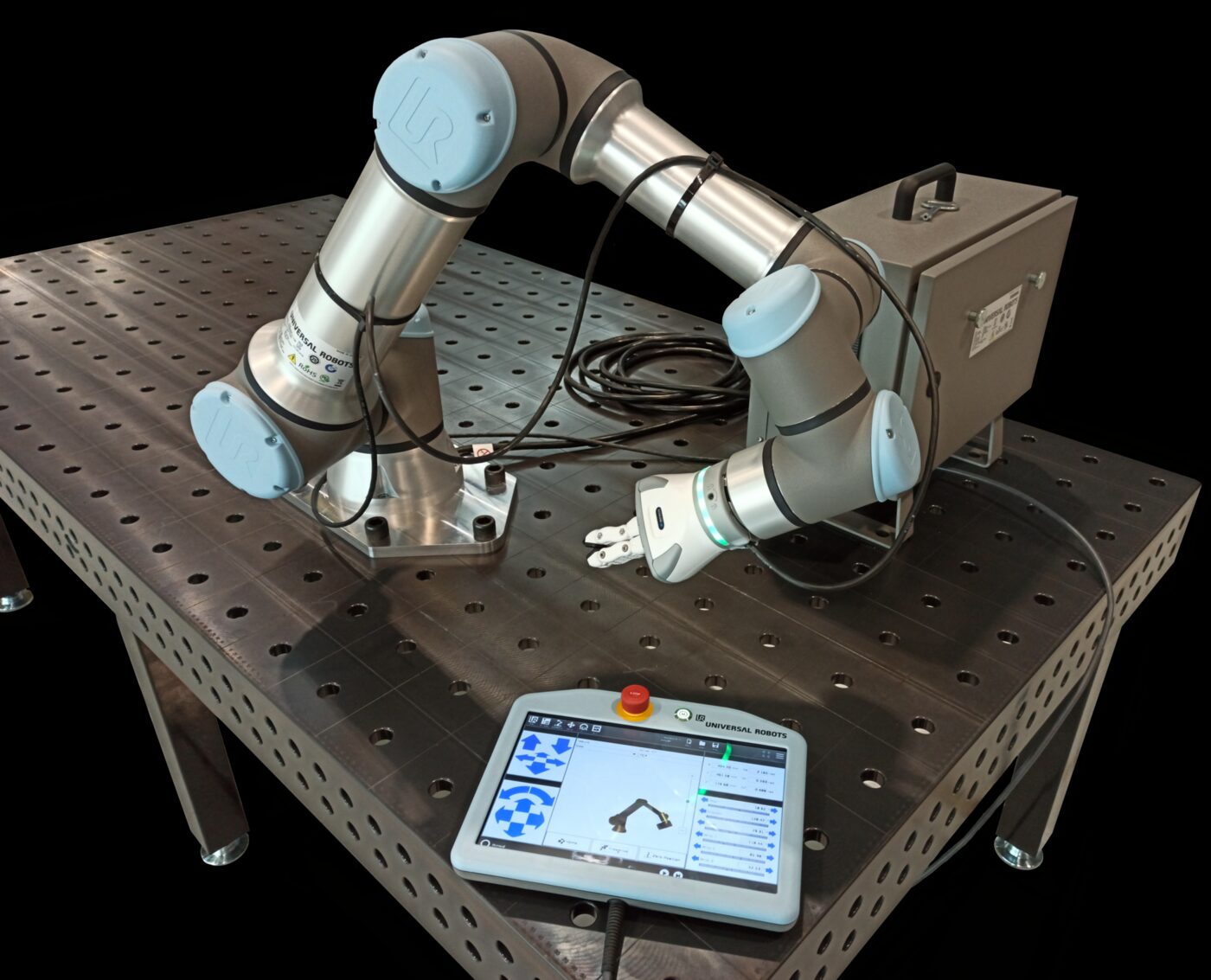

A traditional welding robot sits in a guarded cell and repeats one programmed path. It pays on long runs of the same part. The newer answer for small shops is the collaborative robot, or cobot: a lighter arm built to work beside people without a cage, which a welder can teach by moving it by hand. Cobot installations reached 66,000 units in 2025, 11% of all industrial robots.[12] The welder does not disappear. One skilled person sets up and supervises a machine that lays the repetitive seams.
Handheld laser welding
Handheld laser welding is spreading in fabrication shops because it is fast on thin material and leaves little distortion. It also brings a hazard that arc welding does not. The American Welding Society’s guidance notes that many handheld units run at 1,000 to 2,000 watts, far into the highest laser hazard class, and need a trained laser safety officer, an enclosed or controlled area and laser-rated eyewear.[13] A stray reflection can injure someone across the room. It is worth asking a supplier who uses the process how it is controlled.
Robots that move the material
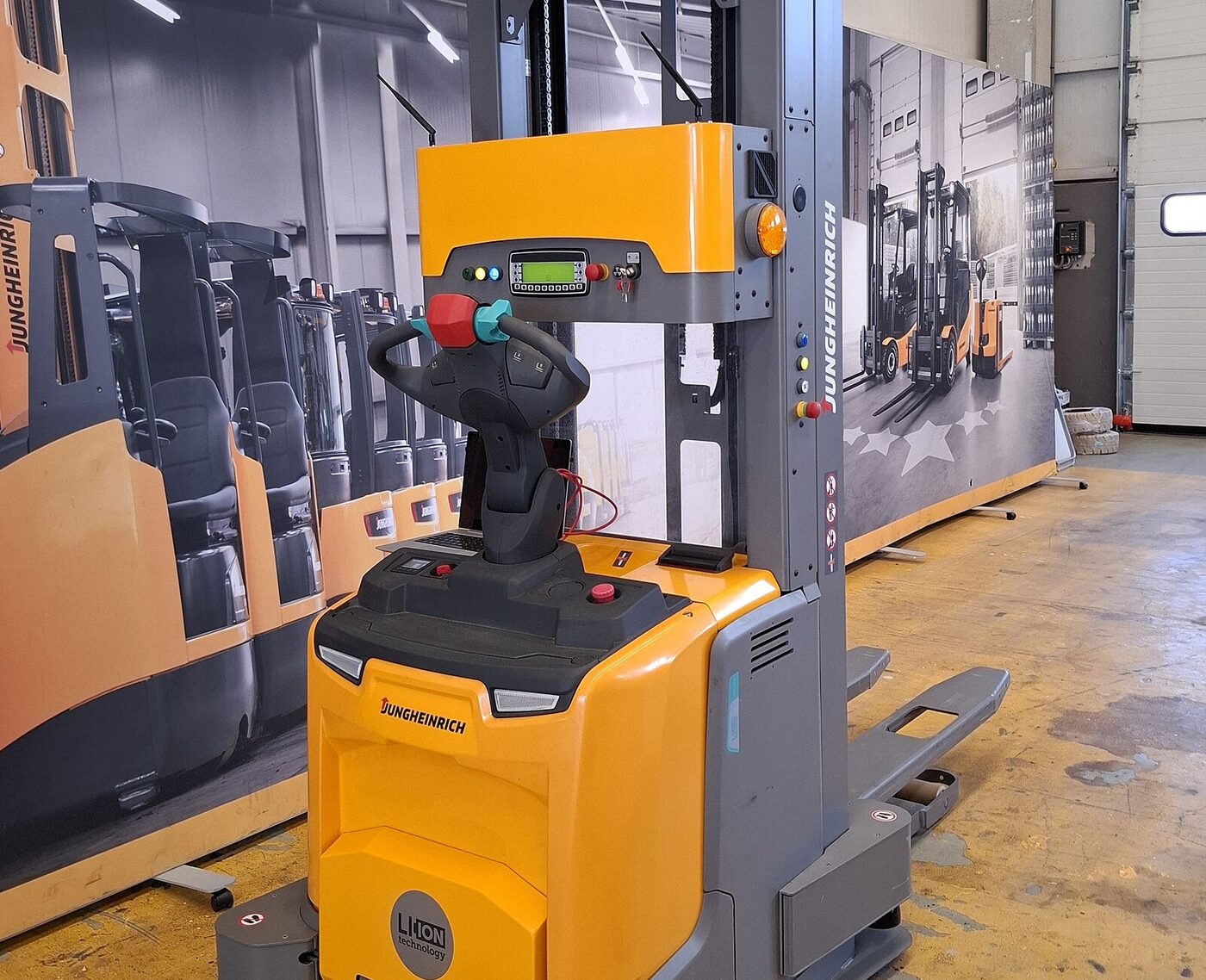
A surprising share of a fabrication shop’s labour is moving things: sheets to the laser, parts to the brake, pallets to welding. Driverless vehicles are taking that over. About 117,500 transport and logistics robots were sold worldwide in 2025, up 21%, and they are the largest group of professional service robots.[29]

5. Two ideas from the edge
Forming without dies. Pressing a shaped panel normally needs a pair of dies, which for a large part are the size of a small car and take months to make. Machina Labs uses two robots to press a sheet into shape from both sides, a little at a time, with no die made for the part. A laser scanner then compares the formed surface with the design and feeds corrections into the next pass. The company lists sheet up to 6.35 mm thick, parts up to 3.7 m long, a tolerance of 1 mm or 0.3% of the largest dimension, and first parts typically within a week.[9] Toyota’s North American arm began a pilot of the method for custom body panels in 2025.[10] It suits prototypes and small runs. It is not a replacement for a stamping press on high volumes.
Humanoid robots. BMW reported in June 2026 that a humanoid robot spent more than ten months at its Spartanburg plant loading sheet metal parts into a welding fixture, and supported the production of more than 30,000 cars.[11] About 7,000 full-size humanoid robots were sold worldwide in 2025.[29] The BMW trial is one robot type doing one loading task at one plant. It shows the idea works. It does not show it is cheaper than a conventional robot, and for a fabrication shop it is still some years away.
6. Cost: what all this does to the price of a part
Automation changes three things in a quote. It cuts set-up time, which matters most on small batches. It cuts scrap on the first parts. And it lets a shop run more hours with the same people. What it does not change is the metal, which is often the largest single cost.
Three outside factors currently move the price more than any machine.
Steel. The benchmark price for hot rolled coil in Northern Europe was about 776 euros a tonne on 18 November 2026, up about 31 euros in a month.[14]
Duties. Since 6 April 2026 the United States has charged 50% on the full customs value of articles made entirely of steel or aluminium, and 25% on a list of products made partly of them. Lower rates apply to qualifying UK metal.[15] Australia imposed dumping and countervailing duties on hot rolled coil from China on 4 May 2026.[17] A further decision on steel plate from China and South Korea was published on 24 September 2026 and is now under review.[18] The Commission’s final report had recommended combined rates of up to 55.1% for some Chinese exporters.[19] The Australian measures apply to the raw steel, not to finished fabricated parts.
Carbon. The EU’s carbon border charge applies to iron, steel and aluminium goods. The certificate price was 75.36 euros per tonne of CO2 for the first quarter of 2026, 75.28 for the second and 82.32 for the third.[16]
Fabricators feel the same pressures. In the Weld Australia survey, 82.1% reported higher energy prices and 78.5% higher material costs.[20] This section is general information, not customs or legal advice, and the rules change often.
What is still hype
- “Lights-out fabrication for any job.” Unattended running pays on repeat parts. On mixed small jobs, people are still faster at some steps.[3]
- “AI quotes and designs the part by itself.” We found announcements, but no published figures on how accurate automatic quoting is in production.
- “A 20 kW laser cuts thick plate as fast as thin sheet.” It cuts thicker plate than before. It does not cut it at thin-sheet speed.
- “Robots have replaced the skilled operator.” About nine in ten bending machines are still run by hand.[1]
- “Humanoid robots are about to run the factory.” The published evidence so far is one loading task at one car plant.[11]
What this means if you buy fabricated parts
| If you | What to consider | What to do or ask |
|---|---|---|
| Order repeat batches of bent parts | Robot bending is now practical at smaller batch sizes | Ask whether the part can run in a bending cell, and keep it within the cell’s size and thickness limits if you can |
| Buy stainless or aluminium parts | Material is a large share of the price, and layout decides how much is wasted | Ask how many parts come out of a sheet, and whether a small change in size would fit more |
| Need tight bend angles | Springback varies with each batch of material | Mark the angles that matter on the drawing and ask for a first-article report on them |
| Design box-shaped panels, doors or covers | Panel benders make these with almost no set-up | Keep flange heights and bend directions simple, and ask what the machine can fold |
| Have thick plate parts | High-power lasers now cover thicknesses that used to need plasma | Ask which process will be used and what edge finish to expect |
| Have welded assemblies in repeat quantities | Robot and cobot welding give consistent seams if the parts fit well | Ask how seams will be welded, and design joints a robot can reach |
| Import into the US, EU or Australia | Duties and carbon charges can outweigh the difference between suppliers | Confirm the tariff code and origin, and ask a customs broker which measures apply before ordering |
| Need a small run of a complex formed panel | A die may cost more than the parts | Ask whether soft tooling or dieless forming would suit, and discuss surface finish |
The suggestions in this table are our view. They are not taken from the sources above.
Where P&A fits
P&A International supplies custom sheet metal parts and assemblies made to your drawing: laser cut, punched, bent, welded and finished, from prototypes to production. Parts are made in China through a partner network where every supplier is ISO 9000 certified or better, and one dedicated engineer reviews the drawing and stays with the project. The machines and companies named in this article are examples from published sources. Nothing here is a claim about the equipment in our partners’ factories, and none of the companies named is connected with P&A. More detail is on our sheet metal fabrication page and our metal fabrication page. Our list of metal fabrication companies in China shows who else to ask, and our article on duties and carbon rules for aluminium extrusion covers the trade measures in more depth.
Have a sheet metal part to quote?
Send us your drawing, material, finish, quantities and the country you are shipping to. One dedicated engineer replies with a proposed approach and indicative pricing, typically within 48 hours.
Request a quoteSources 30 references, click to show
- TRUMPF, "Blechexpo: TRUMPF focuses on automated bending", 2 October 2025
- TRUMPF press release, "TRUMPF's fastest mobile bending cell now even more flexible", 7 October 2025
- MetaalNieuws, interview with Zantech on automatic sorting of laser-cut parts (in Dutch)
- Sapundzhi et al., "Application and Development of CAD/CAM Technologies in the Modern Metalworking Industry", Engineering Proceedings 122(1), 22, 19 January 2026
- Mulidrán et al., "Springback Prediction in Sheet-Metal Bending Based on Finite Element Method and Artificial Neural Network", Metals 16(8), 880, 7 August 2026
- Zhao et al., "Intelligent method combining models and process data for springback prediction in sheet metal stamping", Engineering Applications of Artificial Intelligence 173, 2026
- Behnen et al., "Sheet metal localization using deep learning and synthetic data", Journal of Intelligent Manufacturing 37, 399-415
- TRUMPF, TruLaser 5030 / 5040 / 5060 fiber technical data
- Machina Labs, capabilities and frequently asked questions
- Business Wire, "Machina Labs Advances Custom Automotive Manufacturing with AI and Robotics", 30 September 2025
- BMW Group, "BMW Group advances the use of Physical AI in production with Figure 03 project in Spartanburg", 25 June 2026
- International Federation of Robotics, President's Report on World Robotics 2026, 24 September 2026
- American Welding Society, Welding Digest, "Getting a Grip on Handheld Laser Safety", January 2026
- EUROMETAL, "Local HRC prices rise in Northern Europe on higher costs", 19 November 2026
- EY, "US presidential proclamation modifies Section 232 tariffs on steel, aluminum, copper and their derivative products", 3 April 2026
- European Commission, Price of CBAM certificates
- Australian Anti-Dumping Commission, Anti-Dumping Notice 2026/078, hot rolled coil steel from China
- Australian Anti-Dumping Review Panel, notice of intention to conduct a review, certain flat rolled steel products, 18 November 2026
- SteelOrbis, "Australia recommends duties of up to 55.1 percent on Chinese steel plate, excludes POSCO", 5 October 2026
- Australian Manufacturing, report on Weld Australia's 2026 Industry and Workforce Outlook Survey, 30 September 2026
- US Bureau of Labor Statistics, Occupational Outlook Handbook: Welders, Cutters, Solderers, and Brazers
- Bystronic, "The new ByCut Star: Efficient laser cutting with brainpower", November 2022
- TRUMPF, customer story: VDL Technics B.V., Boxtel, Netherlands
- ANDRITZ, press release on the Schuler Laser Blanking Line 1.18 DFT, 28 April 2025
- TRUMPF, TruBend Series 3000 product page
- Salvagnini, product highlights brochure, 2025 (hosted by the Italian machine tool association UCIMU)
- International Federation of Robotics, "China Installs 59 Percent of World's Industrial Robots", 24 September 2026
- International Federation of Robotics, "Robot Density Highest in South Korea, Singapore and Germany", 12 November 2026
- International Federation of Robotics, "Global Sales of Professional Service Robots Surge 24%", 30 September 2026
- American Welding Society, Welding Digest, "Where Are the Welders?"
Figures were read from these sources on 25 November 2026. Machine makers’ figures are their own claims and are marked as such in the text. Prices, duties and carbon rules change often; check the current position before relying on them. Charts are original drawings by P&A International from the data cited under each one. Machine photos are used under the open licences shown beneath each one; they show examples of each technology and are not photos of P&A’s or its partners’ equipment. Top photo: Photo: Bystronic Corporate Communications, via Wikimedia Commons, CC BY-SA 4.0. Cropped and resized.
